
Sourcing Guide
How to Choose an Exfoliating Glove Manufacturer: A 15-Point B2B Sourcing Checklist
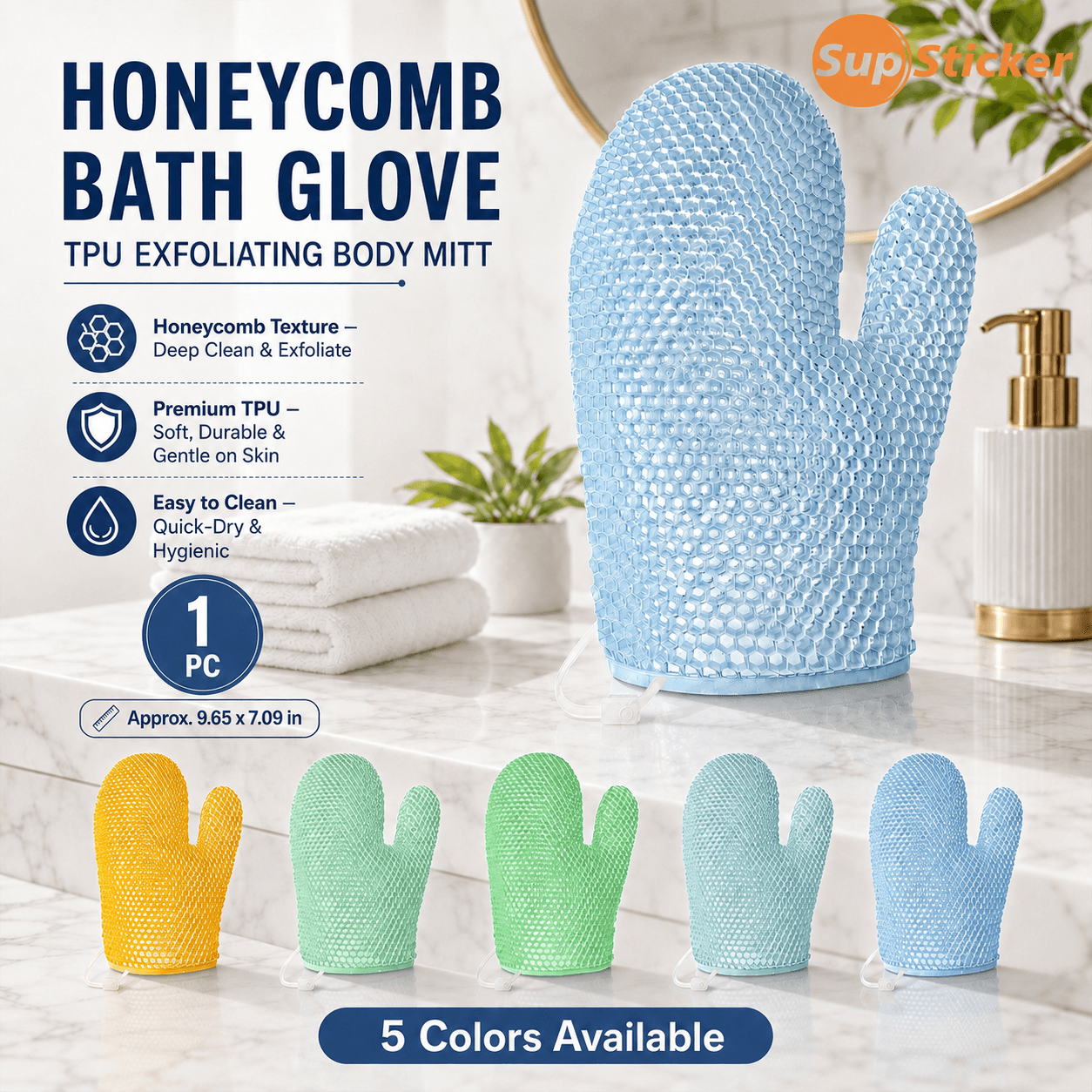 Brand visualization — replace with verified factory photography when available.
A credible exfoliating glove manufacturer should do more than quote a low unit price. For an importer or private-label brand, the real sourcing task is to confirm product fit, repeatability, documentation, communication and shipment control before volume production begins.
Choose a manufacturer that can translate your requirements into a written specification, provide production-representative samples, explain material and process controls, define defects, support packaging approval and maintain traceability from purchase order to shipment. Treat certifications and performance claims as evidence to verify, not sales language to copy.
Why Supplier Selection Fails
Many sourcing problems begin before production. The buyer sends only a product photo and quantity; the supplier quotes a visually similar item; both sides assume that color, material, thickness, packaging and quality level are understood. When the sample or shipment arrives, the disagreement is framed as a quality failure even though the actual failure was an incomplete specification.
Another common mistake is qualifying the sales response instead of the production system. Fast replies are valuable, but they do not prove lot consistency, raw-material control, retained samples or corrective-action capability. A strong evaluation combines commercial responsiveness with objective evidence.
The following 15-point checklist is designed for bath-care gloves and scrubbers. It can be used for remote qualification, sample comparison and shipment preparation without pretending that a checklist replaces an on-site audit or independent inspection.
The 15-Point Manufacturer Checklist
1. Product-category experience. Ask which bath-glove structures the supplier produces regularly, which steps are performed internally and which are subcontracted. Request current, non-confidential examples rather than accepting a broad claim such as “we make all beauty products.”
2. Material identification. The quotation and sample record should state the material family and any grade-level information the supplier can disclose. If compliance or restricted-substance requirements apply, request relevant declarations and reports for the exact material and finished product scope.
3. Process clarity. Ask for a simple process flow from incoming material through forming, joining, trimming, inspection, packing and shipment. The purpose is to identify control points and outsourced steps, not to collect marketing photographs.
4. Written specification capability. A manufacturer should be able to convert the approved sample into measurable requirements: dimensions, tolerances, weight reference, color standard, structure, loop, logo, packaging and carton configuration.
5. Sample classification. Confirm whether each piece is a stock sample, material sample, appearance sample, functional prototype or production-representative sample. Never approve mass production from an undefined sample.
6. Color management. Agree on the reference system, lighting conditions, acceptable range and approval method. Screen colors and casual phone photos are not reliable production standards.
7. Logo and artwork control. Provide vector artwork, dimensions, position, color reference and a signed proof. Check barcode, country-of-origin wording, warnings and importer information separately.
8. Packaging capability. Verify whether packaging is produced internally or by a partner, and identify packaging MOQ, print method, material, insert, sealing, drop protection and master-carton requirements.
9. Quality-control plan. Ask what is checked during production and before packing. For open-structure TPU products, relevant checks may include cell consistency, dimensions, finish, joins, loop attachment, color, contamination and packaging count.
10. Defect definitions. Agree on examples of critical, major and minor defects. Photographs and approved boundary samples are more useful than the phrase “good quality.”
11. Traceability. Purchase order, material lot, production date or batch, inspection record and carton identification should connect well enough to investigate a complaint. The appropriate level depends on product risk and market requirements.
12. Capacity and scheduling. Ask for realistic capacity available to your product, peak-season constraints and the point at which the lead time begins. Do not confuse theoretical machine capacity with committed delivery capacity.
13. Communication and change control. Confirm who approves changes, how revisions are numbered and which document controls production. Verbal changes during a messaging conversation create avoidable risk.
14. Export and shipment preparation. Review Incoterm, carton marks, pallet requirements, document list, booking responsibility and inspection timing before the goods are finished.
15. Corrective action. Ask for an anonymized example of how the supplier investigates a nonconformity. A useful response identifies containment, root cause, corrective action, verification and prevention—not only a discount.
Documents to Request Before Sampling
| Document | Why it matters | What to verify |
|---|---|---|
| Quotation | Aligns commercial assumptions | Product code, quantity, Incoterm, packaging, tooling, validity |
| Preliminary specification | Defines the intended product | Material, dimensions, color, structure and finish |
| Material declaration | Supports material identity | Supplier, grade/scope, date and relevance to the sample |
| Available test reports | Supports specific claims | Applicant, sample description, standard, date and result |
| Artwork proof | Controls printed information | Version, dimensions, colors, barcode and legal wording |
| Sample approval record | Creates a production reference | Sample type, date, approved features and exceptions |
| Packing specification | Protects shipment and count | Unit pack, inner carton, master carton, marks and quantities |
Need a structured supplier comparison?
Send your specification or reference sample. We can help define the questions, sample type and quotation inputs for a TPU bath-care project.
How to Run a Useful Sample Evaluation
Start with a written brief. Include target market, buyer type, product format, intended user experience, estimated quantity, required color, branding, packaging, target launch date and any mandatory documentation. A supplier can then identify conflicts before making a sample.
Evaluate multiple pieces when possible. One perfect piece does not demonstrate repeatability. Record dimensions, visible construction, texture, loop or handle, dry and wet handling, rinse behavior, packaging fit and any odor or contamination. Photograph samples under consistent lighting and assign a unique code.
Separate observations from acceptance criteria. “Feels too rough” is a useful observation but not a repeatable standard. It may lead to a defined comparison sample, hardness range or geometry revision. The goal is to convert preference into something production can follow.
After approval, sign and retain at least one reference sample on each side. If a pre-production sample differs from an earlier prototype, update the specification and approval record. Do not rely on an old photograph to resolve a shipment dispute.
Factory Testing and Shipment Inspection
Factory testing should match the product risk and the claims you intend to make. Basic production checks can include dimensions, weight reference, visual defects, construction integrity and packaging count. More specialized chemical, durability or microbiological claims may require an independent laboratory and a clearly defined standard.
A shipment inspection should occur when enough goods are complete and packed to represent the order, but early enough to allow correction. The inspection instruction should identify the purchase order, SKU, quantity, sampling method, defect classification, approved sample and packaging requirements.
Do not add a test simply because it appears on another supplier’s website. Every test has a sample description, method and scope. Ask: Does the tested sample match our SKU? Is the report current and authentic? Does the conclusion support the exact wording we plan to publish?
Red Flags That Deserve Follow-Up
Be cautious when the supplier refuses to identify which processes are subcontracted; changes product details without updating the quote; offers compliance claims without reports; cannot distinguish stock samples from production samples; gives an unusually low price without confirming packaging; or promises any lead time and MOQ immediately.
A red flag is not always proof of misconduct. It is a signal to slow down, ask for evidence and document assumptions. Small manufacturers can be highly capable, and large factories can still be a poor fit for a low-volume specialized project. Fit and control matter more than company size alone.
Supplier Scorecard
| Area | Suggested weight | Evidence |
|---|---|---|
| Product and material fit | 20% | Samples, specifications, material information |
| Quality system | 20% | Control plan, inspection records, defect definitions |
| Customization and packaging | 15% | Artwork proof, packaging samples, feasibility |
| Commercial fit | 15% | MOQ, price structure, tooling, payment, Incoterm |
| Communication and change control | 15% | Response quality, revision discipline, ownership |
| Delivery and export readiness | 10% | Schedule, packing, booking and document plan |
| Corrective-action capability | 5% | Example process and accountable contact |
Conclusion
The best exfoliating glove manufacturer is not simply the factory with the lowest MOQ or fastest reply. It is the supplier whose product architecture fits your brief and whose team can turn requirements into controlled samples, specifications, inspections and shipment records. Use the checklist to ask better questions, then verify the answers with evidence.
Frequently Asked Questions
What should I send when requesting a quote?
Send product type, target market, quantity, color, logo, packaging, required documents, delivery country and target timing.
Should I audit the factory before ordering?
It depends on order value and risk. Remote evidence, samples and third-party inspection may be sufficient for some projects; higher-risk programs may justify an on-site audit.
How many samples should I evaluate?
Evaluate enough pieces to check consistency, not only one ideal piece. The number depends on development stage and product risk.
What is a production-representative sample?
It is made with the intended material, process and construction closely enough to represent mass production. Confirm any remaining exceptions in writing.
When should shipment inspection happen?
When production and packing are sufficiently complete to represent the order, while leaving time for corrective action before shipment.
Ready to discuss your product?
Turn Your Requirements Into a Clear Sample Plan.
Share the product style, target market, customization, quantity and timing. We’ll help define the next step.Send Your RequirementsThis guide separates general material information from finished-product claims. Material properties should be verified for the selected grade and product design. Consumer exfoliation guidance should remain gentle and non-medical.
Google Search Central: AI features and your websiteBASF: Elastollan TPU material informationAmerican Academy of Dermatology: How to safely exfoliate